Building Agentic OS
Background
Most AI products start with a chat box. That is useful, but it makes every session feel temporary. The model can reason, but it forgets the surrounding life: projects, tasks, deadlines, people, and decisions.
Agentic OS is my attempt to move the useful surface from chat to context. Obsidian is the source of truth. OpenClaw is the orchestration layer. Claude Code is the implementation worker.
Product
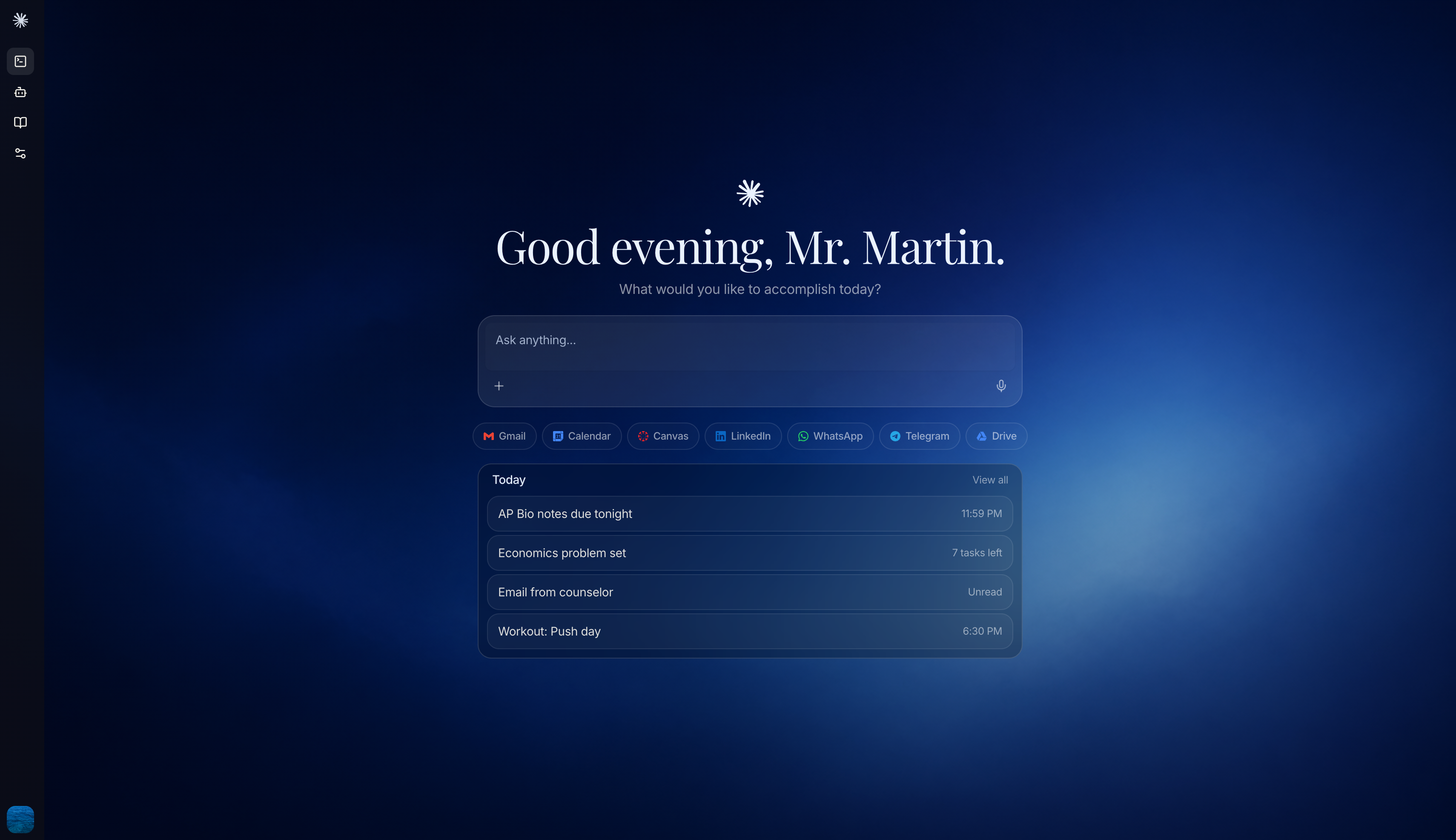
The system is built around a command center: active projects, daily priorities, content drafts, outreach, school deadlines, and agent handoff prompts. The point is not to show everything. The point is to make the next action obvious.
Agents read the same notes I use. Project plans, daily notes, writing rules, and task queues live in the vault, so the AI does not have to reconstruct context from memory every time.
Approach
The main design problem is priority. A personal operating system fails if it becomes a museum of integrations. Calendar, email, projects, and tasks only matter when they change what I should do next.
The workflow is intentionally simple: run the morning plan, work, capture decisions, close the day. Anything that does not survive that loop is probably not part of the system.
What I learned
The hard part of agents is not only intelligence. It is memory, permissions, source of truth, and escalation. A capable model with bad context still guesses.
The more I use agents, the more I think the product boundary is the context surface around them. Better notes, clearer project state, and explicit handoff prompts make the model feel less like a chatbot and more like a worker.